Finding remote jobs in Germany can sound like the perfect solution. Maybe you live in a smaller city with fewer career opportunities, want to avoid a long commute, or simply need more flexibility in your everyday life.
But once you start searching, things can quickly become confusing. Does “remote” mean you can work from anywhere? Is “home office” the same as fully remote? And where should you actually look for legitimate remote opportunities in Germany?
Remote jobs do exist, including positions where English is the main working language. But they are also attractive to many applicants, which means you need a more targeted job search than simply typing “remote” into LinkedIn.
What Does a Remote Job in Germany Actually Mean?
One of the most important things to understand is that “remote” can mean very different things depending on the employer.
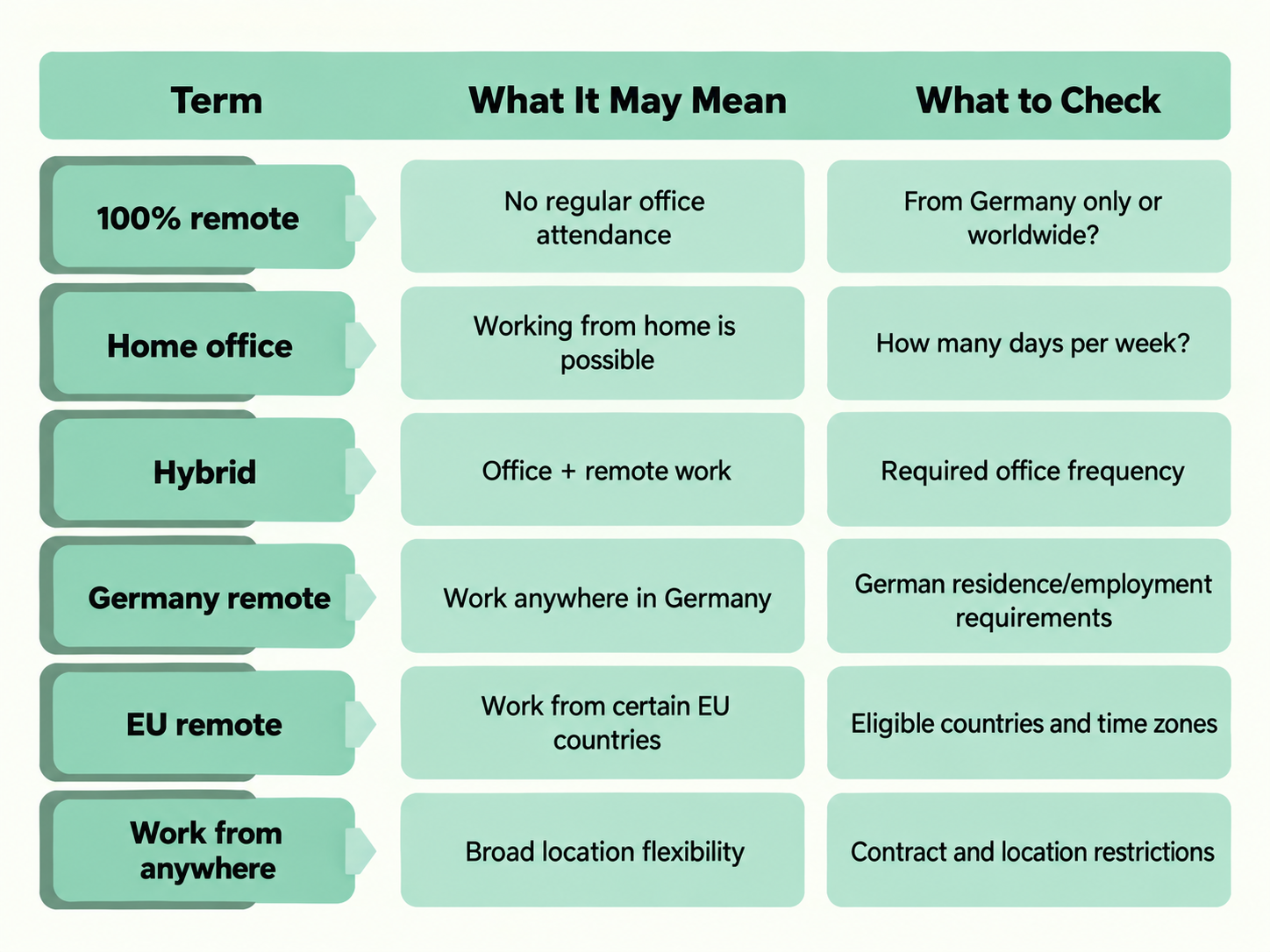
A job advertised as “100% remote,” for example, does not automatically mean that you can work from anywhere in the world. Some companies mean that you can work from anywhere within Germany.
This can be connected to payroll, tax, social security, insurance and employment requirements. A company may therefore allow you to live anywhere in Germany while still requiring you to be officially employed and based in the country.
Other employers may allow remote work across the EU or within certain European time zones. A smaller number of companies offer true “work from anywhere” arrangements.
This distinction is particularly important for international talents. If you are planning to spend longer periods working from your home country, do not assume that a German remote contract automatically allows this.
Look carefully for wording such as:
- Remote within Germany
- Deutschlandweit remote
- Home office anywhere in Germany
- EU remote
- Remote within European time zones
- CET working hours
- Work from anywhere
The exact wording can make a significant difference.
Table 1: What Remote Work Terms Can Mean
Remote vs. Home Office vs. Hybrid Jobs
Another common source of confusion is the term “home office.”
On German job boards, a position listed under “home office” is not necessarily a fully remote job. It might simply mean that employees can work from home one or two days per week.
You may also see the German term “teilweise Homeoffice,” which means that home office is only partially available.
Hybrid positions can still offer considerable flexibility, but you need to know exactly what is expected. If you live three hours away from the office, a position requiring two office days every week is probably not going to work for you.
Before applying, ask yourself: How much flexibility do I actually need?
If you specifically want remote jobs in Germany because you do not want to relocate, your definition of remote may be very different from someone who simply wants to work from home twice per week.
Where to Find Remote Jobs in Germany
You do not necessarily need a remote-specific job board to find remote opportunities. In fact, some of the biggest German and international job platforms should be part of your search.
LinkedIn, Indeed and StepStone
A good starting point is using major platforms such as LinkedIn, Indeed and StepStone.
Instead of adding “remote” directly to every job title, search for the position you actually want and then use the available remote or home-office filters.
For example, search for:
Business Analyst
rather than:
Remote Business Analyst
Then apply the relevant location and remote filters.
This gives the platform more information about what you are actually looking for and can help you discover positions that use slightly different wording.
You should also create several targeted alerts instead of one very broad alert.
If you work in customer success, for example, you could create separate alerts for:
- Customer Success Manager
- Client Success Manager
- Account Manager
Apply the remote filter to each one. Similar responsibilities can appear under different job titles, so searching for only one title can unnecessarily limit your results.
Xing and the Federal Employment Agency
Xing can also be useful, particularly if you are interested in more traditional German companies or German-speaking positions.
Another option is the job platform of the Bundesagentur für Arbeit, Germany’s Federal Employment Agency. It should not necessarily be your only platform, but it can be an additional source of opportunities.
For most international job seekers, starting with a combination of LinkedIn, Indeed and StepStone and then adding more specialized platforms is usually more manageable than checking every available job board.
Search in Both English and German
Even if you are specifically looking for English-speaking jobs in Germany, German search terms can help you find opportunities that you would otherwise miss.
Try combining English keywords such as:
remote, home office, fully remote
with German terms such as:
mobiles Arbeiten, ortsunabhängig, deutschlandweit, vollständig remote, Homeoffice
The same applies to your actual job title.
For example, someone searching for sales positions could try both “Sales Manager” and “Vertriebsmanager.” A company may operate internationally while still publishing its vacancy using German terminology.
You do not necessarily need strong German skills to experiment with German search terms. The purpose is simply to broaden the number of relevant vacancies you can discover.
Use Specialized Job Boards for Remote and English-Speaking Jobs
Once you have your main job boards covered, specialized platforms can help you find additional remote jobs in Germany.
For international talents, Arbeitnow can be particularly interesting because it focuses on opportunities in Germany and provides filters related to English-speaking jobs, remote work and visa sponsorship.
EnglishJobs.de is another platform specifically targeting English-speaking opportunities.
If you work in technology, GermanTechJobs can be worth checking. It focuses on software and technology positions and provides additional information about areas such as the required technology stack.
Startup-focused platforms can also be useful because some startups offer more flexible working arrangements. Depending on your field, platforms such as Berlin Startup Jobs and Wellfound may therefore be worth adding to your search.
The goal is not to use all of them. Find the platforms that consistently produce relevant results for your profile.
Don’t Limit Your Search to Germany
If you can legally and practically work for an employer elsewhere in Europe, you can also expand your search beyond German companies.
European remote job boards can give you access to employers hiring across multiple countries.
Platforms such as EU Remote Jobs and Remote in Europe focus on European remote opportunities. Working Nomads also provides remote vacancies, including European opportunities across areas such as programming, marketing, design and customer success.
Larger international remote platforms include We Work Remotely, Remote OK and NoDesk.
However, always check the geographic restrictions before applying.
A job appearing on an international remote platform does not automatically mean the company can employ someone living in Germany. Some positions are restricted to specific countries, while others require candidates to work within particular time zones.
Useful search terms can include:
Europe only, EU candidates, Germany eligible, CET working hours or remote Europe.
Build a Remote Job Search System
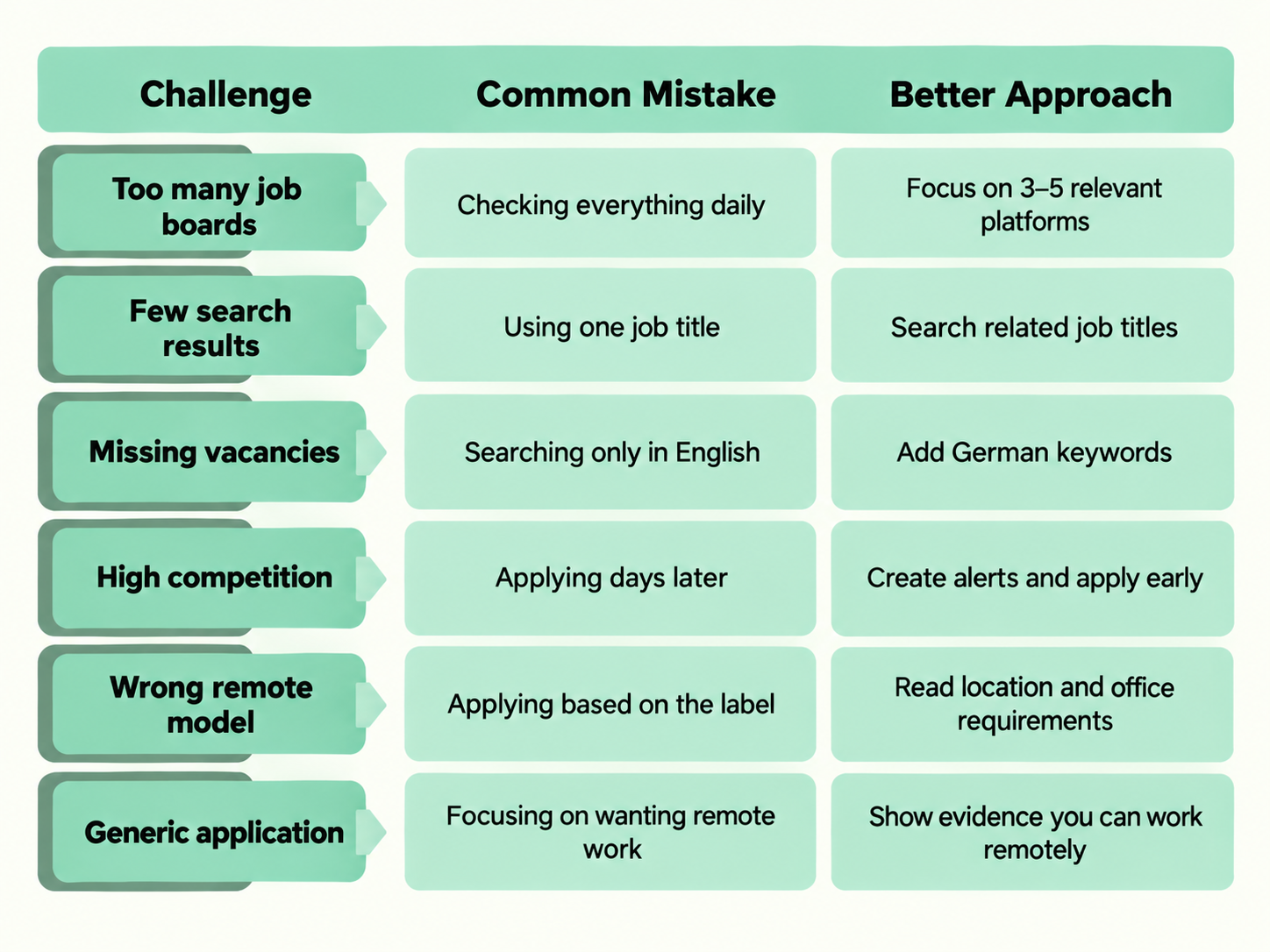
One of the biggest mistakes you can make is opening ten different job boards every morning and starting your search from zero.
Instead, build a simple system.
Choose around three to five platforms that consistently show jobs relevant to your profile. Then create specific alerts for your main target positions.
For example, an English-speaking software engineer might focus on LinkedIn, GermanTechJobs, Arbeitnow and one or two European remote platforms.
A German-speaking sales professional might get better results from LinkedIn, StepStone, Indeed and Xing.
Your search strategy should reflect your profession, language skills and preferred type of employer rather than following the exact same list of platforms as everyone else.
Table 2: Building a Better Remote Job Search
Why Job Alerts Matter Even More for Remote Jobs
Remote positions can attract applicants from a much larger geographic area than office-based positions.
That can mean more competition.
Instead of manually checking whether a new position has appeared, set up alerts for your target roles and filters. This allows you to identify suitable vacancies relatively quickly after they are published.
It also helps to have your application documents ready.
Your CV should already be adapted to the type of role you are targeting, and your LinkedIn profile should clearly communicate your relevant experience and skills. If you use a cover letter, having a strong base version that you can customize will also save time.
Being fast does not mean sending a generic application within five minutes. Relevance still matters. But you also do not want to spend several days preparing every application while suitable remote vacancies receive large numbers of applications.
Show Employers That You Can Work Remotely
Wanting to work remotely is not a qualification.
Your application should therefore not focus too heavily on why remote work would make your personal life easier. Employers primarily want to understand why you can perform the job successfully.
For remote positions, you can strengthen your application by showing evidence of independent work, reliable communication, time management and digital collaboration.
Have you coordinated projects across several countries? Worked with colleagues in different locations? Managed responsibilities independently? Used tools such as Microsoft Teams, Slack, Zoom, Notion, Jira or Asana?
Make that experience visible.
Instead of writing:
“I am comfortable working remotely.”
you could communicate something more concrete:
“I coordinated projects with colleagues across three countries using Microsoft Teams and Jira, keeping responsibilities and deadlines transparent across locations.”
The second version gives the employer evidence rather than simply making a claim.
What International Talents Should Check Before Applying
Before sending an application for a remote job in Germany, take a few minutes to understand what the employer is actually offering.
Check where you are allowed to work from. Then look at whether the position is permanent, temporary, freelance or another form of employment.
Also check the expected working hours. A European employer may accept candidates from different countries but still require everyone to be available during CET business hours.
Look for information about required office attendance and business travel as well. A “remote” employee might still be expected to attend quarterly meetings, onboarding sessions or client appointments in person.
Finally, if you require a particular residence or work authorization arrangement, clarify whether the employer is able to hire someone in your situation. Do not assume that a remote position automatically removes these requirements.
Be Careful With Remote Job Scams
Unfortunately, remote work can also attract fraudulent job advertisements.
Be cautious if an employer offers you a position without a proper interview, asks you to pay for equipment or training in advance, or requests sensitive banking information very early in the process.
Communication exclusively through private messaging apps can also be a warning sign, particularly if you cannot verify the recruiter or company independently.
Before moving forward, check whether the company has an official website, a professional company email domain and identifiable employees. Look at the company’s LinkedIn presence and see whether the people contacting you actually appear to work there.
Be particularly careful with jobs promising unusually high salaries for very simple activities such as data entry, product reviews, forwarding money or receiving and resending packages.
A legitimate employer should be able to explain the role, responsibilities, reporting structure, hiring process and employment conditions clearly.
Common Mistakes When Looking for Remote Jobs in Germany
One common mistake is assuming that every job with “remote” somewhere in the description is fully remote. Always read the complete vacancy.
Another is searching only for English job titles. Even international companies may advertise positions using German keywords.
You should also avoid spreading your attention across too many job boards. More platforms do not automatically mean a better search. A smaller number of well-configured job alerts can be much more effective.
And finally, do not make remote work the main reason why an employer should hire you.
Remote work may be one of your priorities, but your application still needs to answer the employer’s most important question: Why are you a strong candidate for this particular job?
Final Advice: Be Specific About the Remote Job You Want
Remote jobs in Germany definitely exist, including English-speaking opportunities. But finding the right one requires more than entering “remote” into a search bar.
Start by defining what remote means for you. Do you need to work from anywhere in Germany? Across Europe? From your home country for several months? Or would two or three home-office days per week already give you enough flexibility?
Then build a focused search around your target roles. Use major job boards alongside one or two specialized platforms, search with German and English keywords, create targeted alerts and check the actual remote-work conditions before applying.
Most importantly, do not search only for a job that allows you to stay at home. Look for an employer whose working model, communication culture and expectations fit the way you want to work.
Looking for Your Next Job in Germany?
CareerBee supports international talents navigating the German job market, from understanding where to search to improving their applications and job-search strategy.
Explore our resources and services to make your job search in Germany more focused and effective.